Literature/202311111357 emissions from moving around
- Source: [@gates2021How to avoid a climate disaster: the solutions we have and the breakthroughs we need]
- Tags: #climate-change #climate-and-transport
Many things fall in the definition of "Moving around". The image below is a perfect summary:
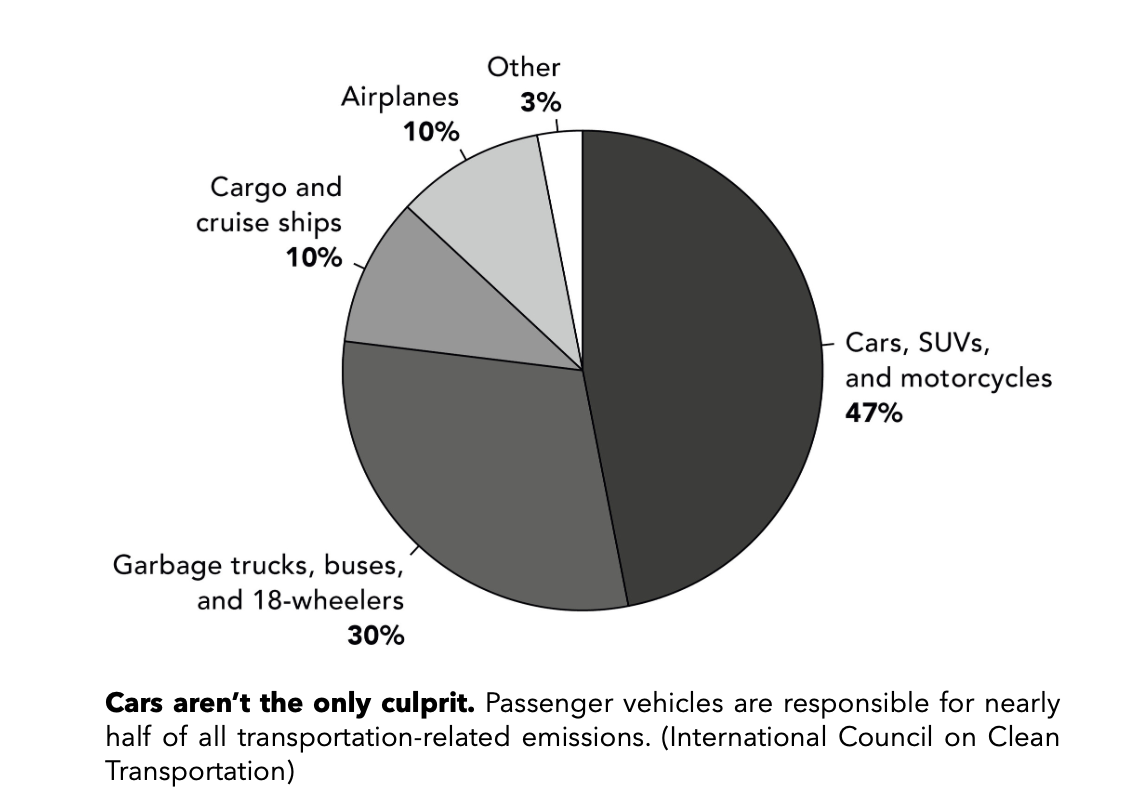
The emissions happen from the combustion of fossil fuels in motors. Changing to electric vehicles seems the obvious transition, provided we can generate enough clean electricity (202311101914 The problem with electricy).
For other types of transportation, however, batteries will never cut it (202111292230 diesel is the most efficient energy storage solution for transport). Alternative fuels, like biofuels are net-zero (they emit $CO_2$ while burning, but they have captured an equal amount while being made).
For ships, the next transition is nuclear-powered, as is already the case for some military ships.
The strategy would be to electrify as much as we can, and use clean fuel for the things we can't, like airplanes.
Backlinks
These are the other notes that link to this one.
Comment