Literature/202603010901 how scientists make purchasing decisions
- Source: [@ghanadan2025Not Buying It: The Art of Selling to Scientists, Doctors, and Other Professional Skeptics]
- Tags: #science-business #sales
A common pitfall is assuming the absolute rationality of the purchasing decision of a scientist. However, when presented with two identical instruments (same specsheet) a scientist will pick one. And that tells us there are some underlying preferences that we need to pay attention to.
In this sense, the picture below shows the different levels of decision making and how to translate them into a communication strategy and benefit logic that can help with influencing in the decision making process.
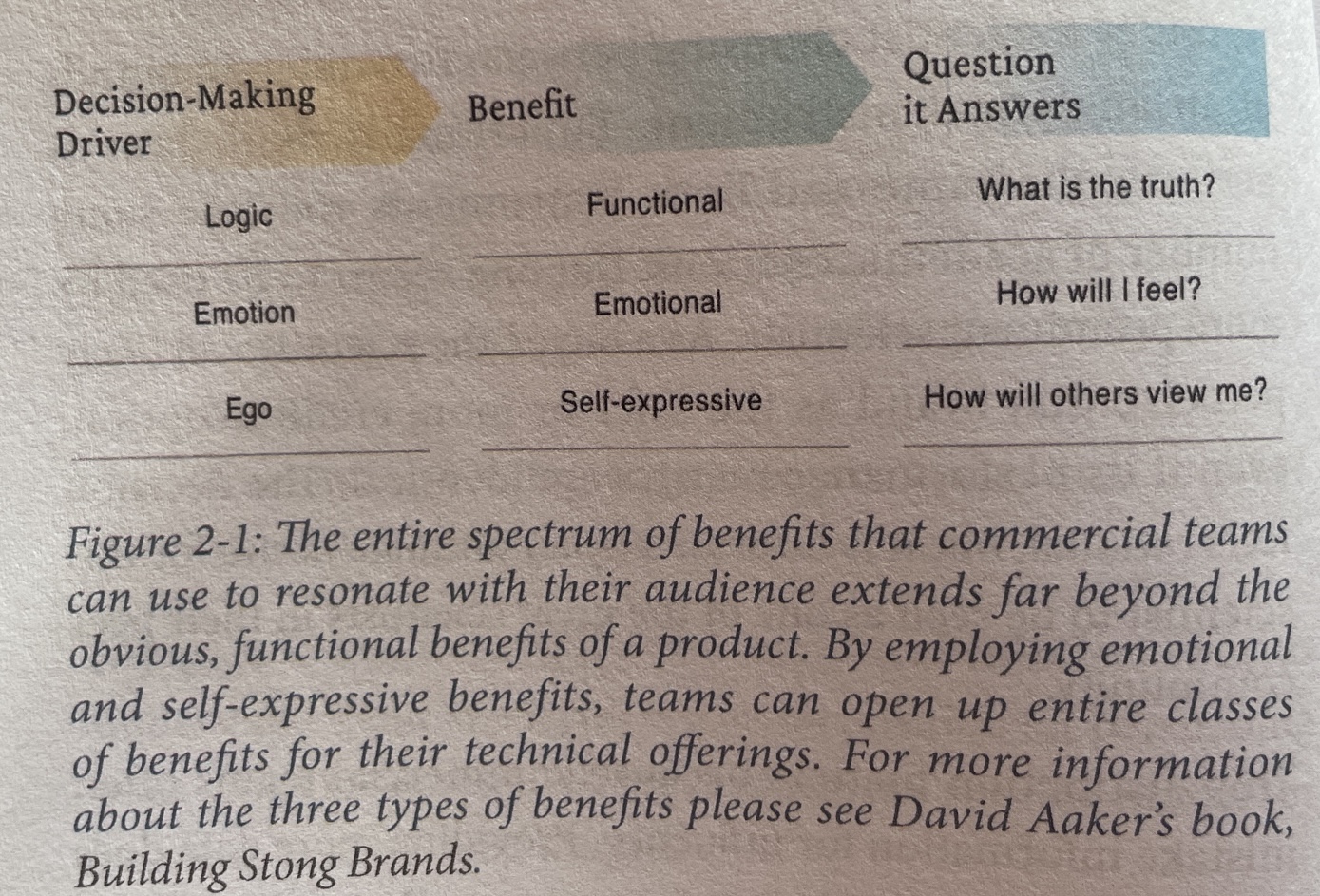
We can't neglect the logic layer, of course, but we should not come up with a strategy that only targets it. That leads to shallow propositions such as:
- Better quality
- Faster turnaround time
- Do more with less
- Simple workflow
- More time
Backlinks
These are the other notes that link to this one.
Comment
Share your thoughts on this note. Comments are not public, they are
messages sent directly to my inbox.

Aquiles Carattino
This note you are reading is part
of my digital garden. Follow the
links to learn more, and remember that these notes evolve over time. After all,
this website is not a
blog.