Superlinear growth
Paul Graham wrote about superlinear returns and I find it a very powerful concept.
The idea is to focus on those activities that compound over time and that lead to a super-linear (perhaps exponential) type of accumulation. At the initial stages, numbers (of whatever you measure) are rather small and they look the same.
Growth is a better indicator than quantity for small companies, if they have the ambition of becoming big, of course.
If two competitors have linear growth, they may en up splitting the market half/half. If one has a super-linear growth, over time it'll capture the entire market ("winner-takes-all").
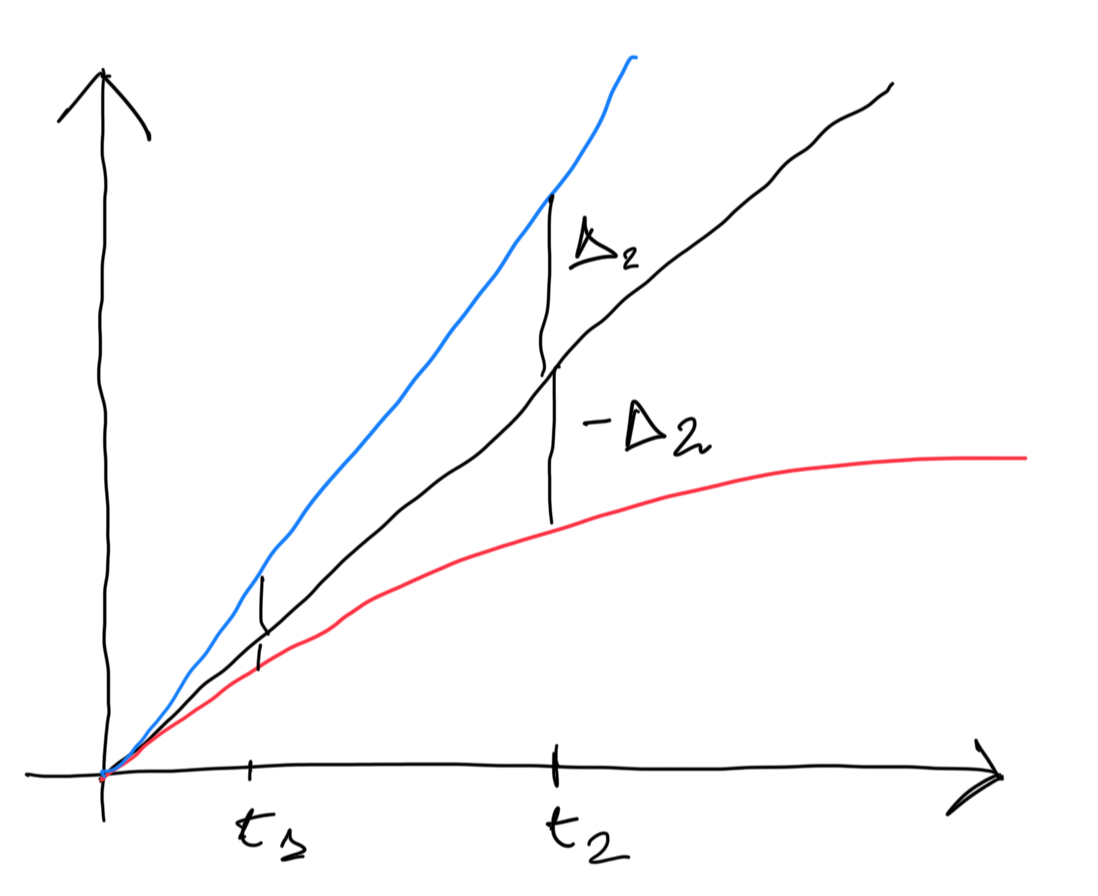
In the end, it all comes down to a mindset. What things can we do that put us in a superlinear trajectory. After all, whether we are in a superlinear path depends on past actions.
Growing the user-base one by one, for example, "does not scale" (see: Do things that can scale), but it may generate a compounding effect. I add one user, but thanks to that, two users sign up without my intervention. I add one more user, two more users sign up plus the extra two each brought. But without that initial push, no one would have ever signed up.
Backlinks
These are the other notes that link to this one.
Comment