Syntenin-1 is the most abundant protein in evs
Tetraspanins like CD9, CD63, and CD81 are often used as markers for EV's, however CD9 and CD63 are used as biomarkers in EVs but they can change from cell line to cell line. A thorough analysis of the proteome identified syntenin-1 as the highest abundant protein and putative universal biomarker[@kugeratski2021Quantitative proteomics identifies the core proteome of exosomes with syntenin-1 as the highest abundant protein and a putative universal biomarker].
However, the biggest challenge is that syntenin-1 is an intraluminal protein and therefore requires permebealization of the membrane to be used as a marker. The image bellow [@kugeratski2021Quantitative proteomics identifies the core proteome of exosomes with syntenin-1 as the highest abundant protein and a putative universal biomarker] shows the difference with the use of CD63:
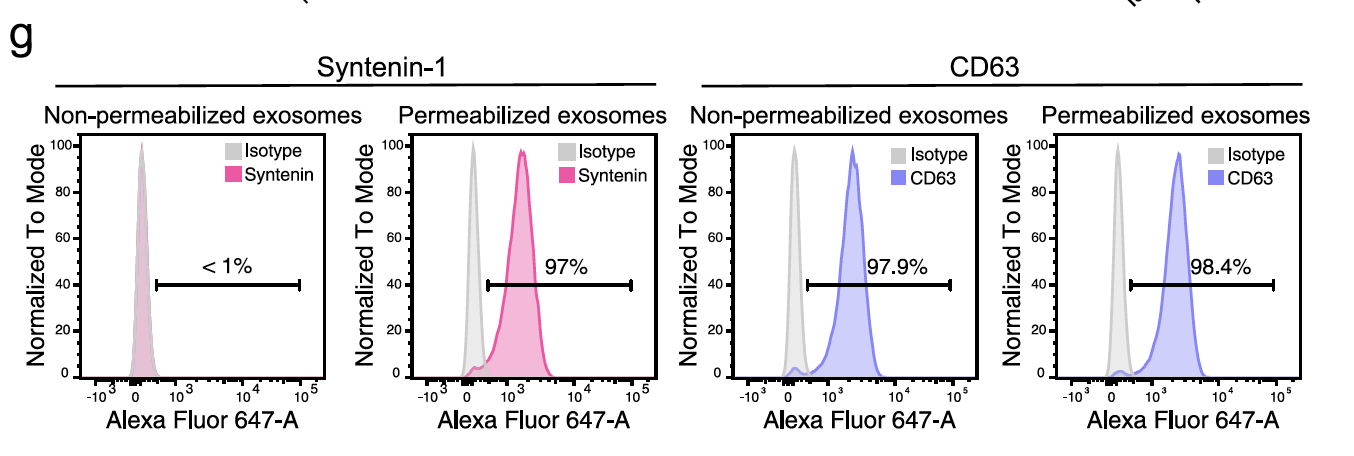
Therefore, syntenin-1 is an abundant protein but may not be the best marker to use in real-life experiments, and much less for any in-vivo assay.
Backlinks
These are the other notes that link to this one.
Comment