How the scientific mind works
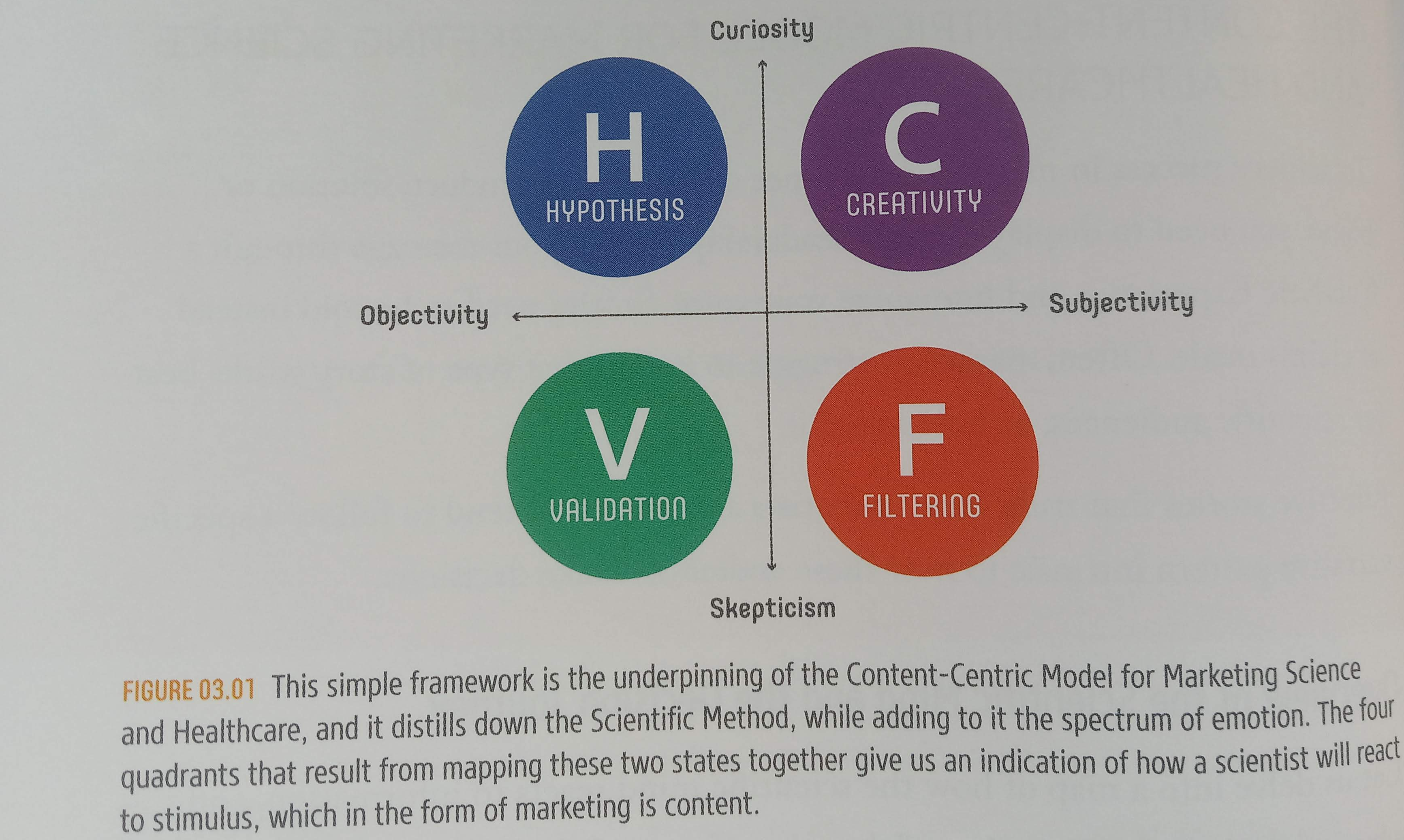
Most people describe the scientific method as a play between hypothesis and validation. However, this neglects the emotional dimensions of the human mind at play, such as those involved in creativity and filtering[@ghanadan2016Catalytic Experiences: Persuading Scientists and Clinicianswith Effective Digital Marketing]. Therefore, from a marketing perspective, we can address the different aspects of the path with different types of content.
The creative stage is when a scientists first engages with an idea, recognize they have a need, or sees an opportunity. This does not mean they have in their minds a product need. However, once the idea settles, they will explore different paths to make a hypothesis.
It is at this stage, once they have the hypothesis, that scientists evaluate the range of products available. This allows them to know how to validate/invalidate their hypothesis, which will finally become evaluation of tools that would allow them to reach their goals.
Literature note on Catalytic Experiences - Hamid Ghanadan
Tags: #scientific-marketing
Backlinks
These are the other notes that link to this one.
Comment