Literature/202603010948 hypothesis curiosity validation filtering matrix
- Source: [@ghanadan2025Not Buying It: The Art of Selling to Scientists, Doctors, and Other Professional Skeptics]
- Tags: #sales #science-business #decision-making
Another useful framework is the matrix below
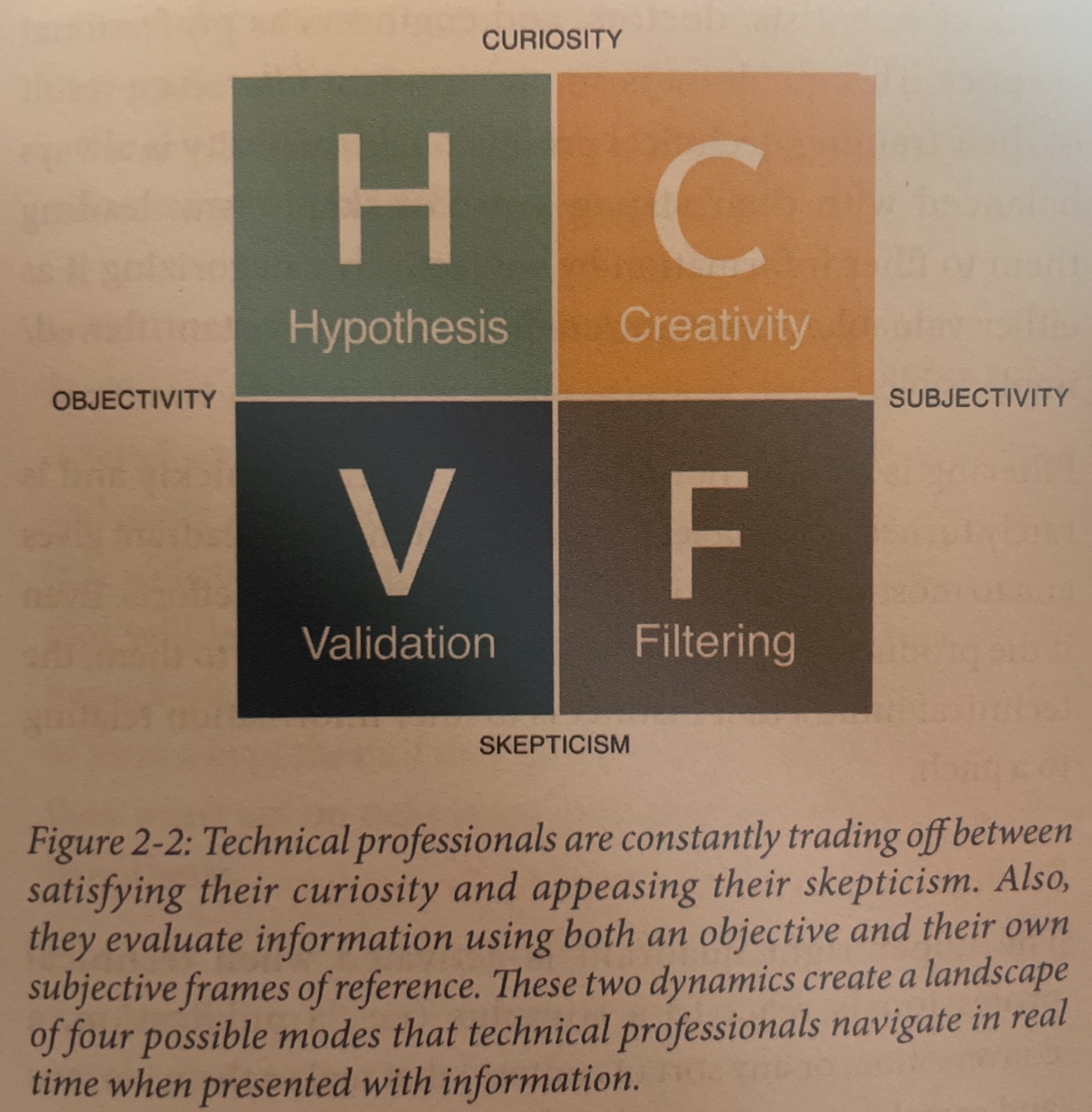
It shows the oscillation between curiosity and skepticism, and between objectivity and subjectivity. This is very similar to the approach in catalytic experiences, but goes one level deeper.
By identifying these 4 different behaviors, we can also decide what and how to communicate. For example, in order for someone to formulate a hypothesis, it may be necessary to make their needs explicit.
Many people don't know they have a problem until they think for long enough about it. You may not realize that something can be done better, with a different approach until someone manages a way of verbalizing a pain.
The complex quadrant is the Filtering: combination of subjectivity and skepticism. If a scientist believes your proposition won't work, your efforts will end. This quadrant is activated irrationally and rather quickly. Your pitch is done.
Backlinks
These are the other notes that link to this one.
Comment