Open hardware microscope chambers
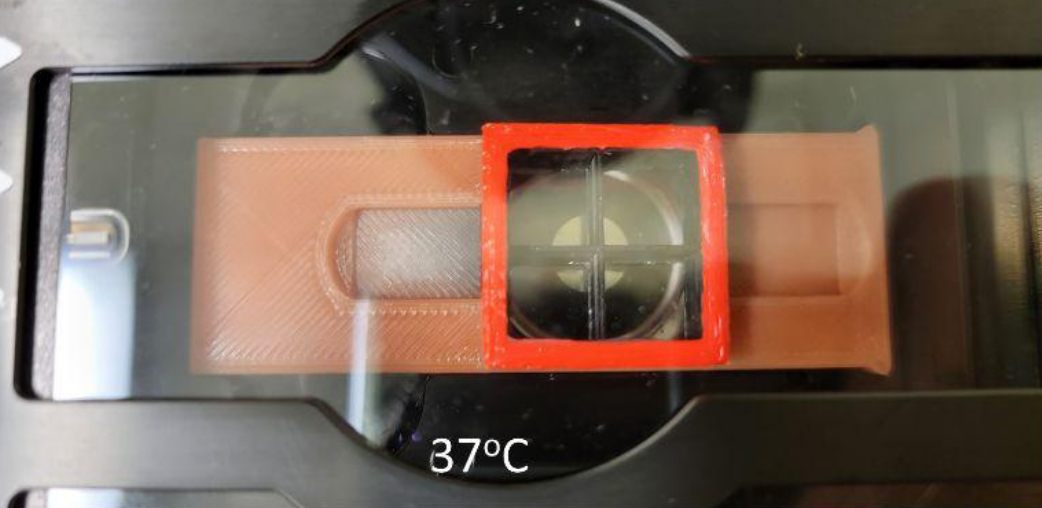
Chambers for microscopy tend to be expensive considering they need to be replaced periodically. An open hardware project[@barbabazan2021Mod3D: A Low-Cost, Flexible Modular System of Live-Cell Microscopy Chambers and Holders] tries to overcome the cost problems by using 3D printing as means of fabrication. Specifically, it uses a mix of filament deposition modeling and masked stereo lithography.
Although the idea of having an open hardware model for the chambers is compelling in itself (easy adaptation to bespoke microscopes, and custom designing for specific problems), the title (and main text) is, again, an example of how open hardware projects focus on cutting costs.
For example, the costs are stated as 0.20U$ per chamber, while a Thermo Scientific one costs 14U$. Factoring the time of the 7 authors involved, materials for failed attempts, electricity, and depreciation of the printers, was not taken into account.
Comment