Literature/202306121138 different types of open hardware
- Source: [@wenzel2023Open hardware: From DIY trend to global transformation in access to laboratory equipment]
- Tags: #open-hardware #equipment #democratization
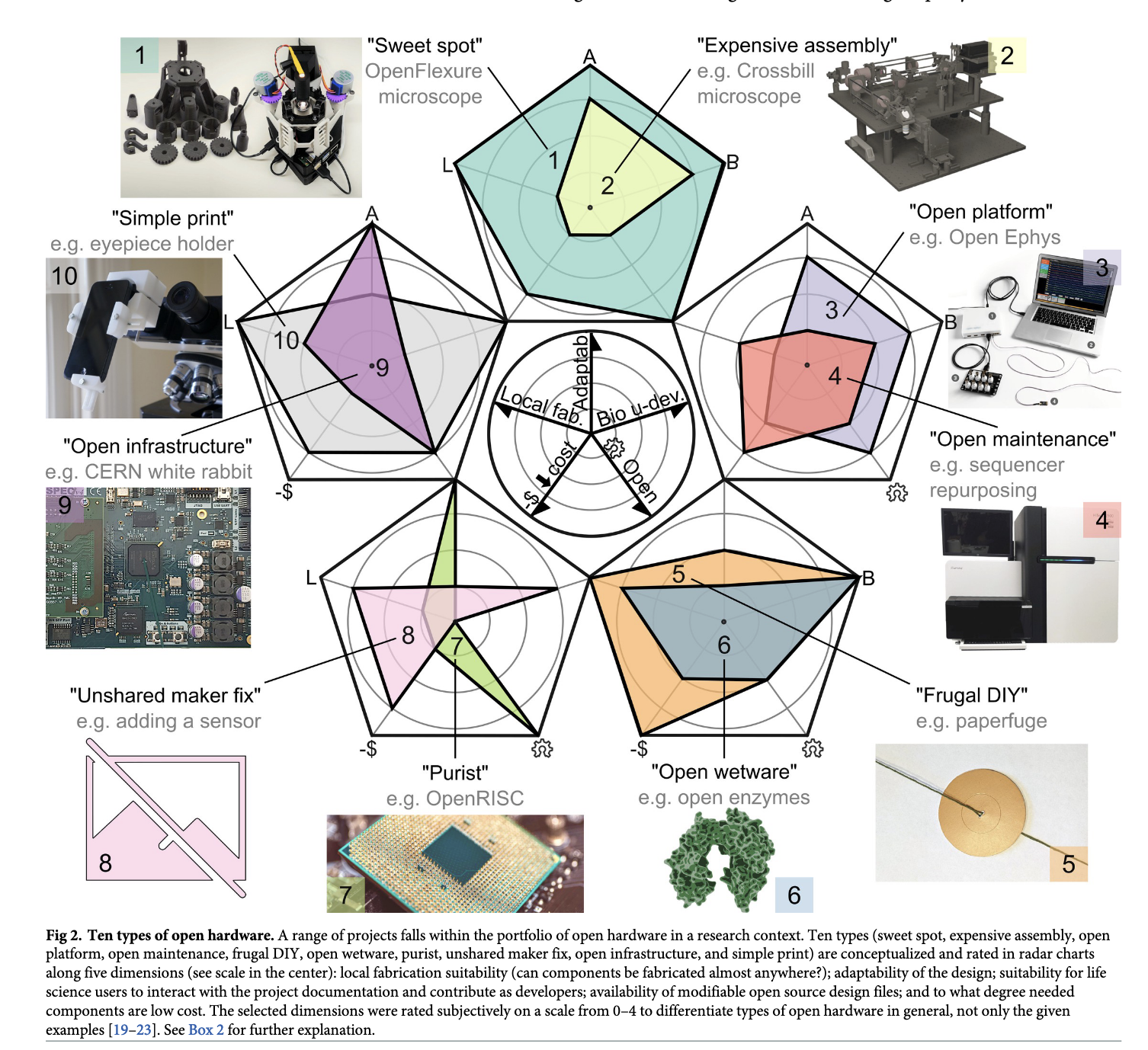
What I liked about the paper is that there is a nice overview of the different meanings of open hardware, acknowledging that not all projects have the same ambitions, nor follow the same guidelines as to what "Open" means.
There are 10 possible situations for open/DIY approaches. Surprisingly, the only one that can be cited in the "sweet spot" is the Open Flexure project. The "Expensive assembly" should not be neglected, as is, potentially, the first approach many researchers can follow, without the extra burden of going the "open hardware" route, without sacrificing chances at protecting the IP, while still focusing on ensuring reproducibility (see: reproducibility is the key factor of open science).
Backlinks
These are the other notes that link to this one.
Comment